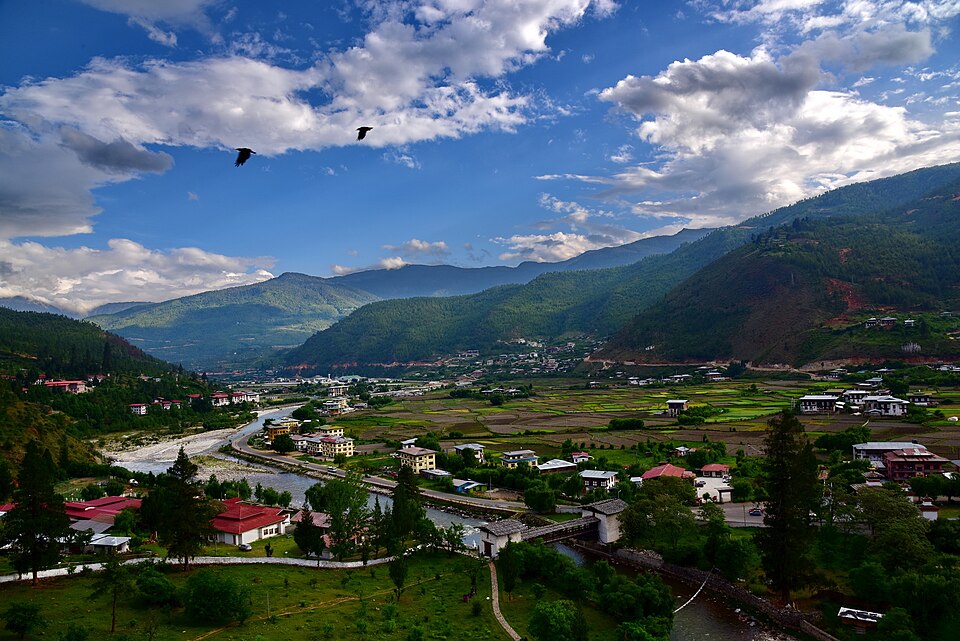
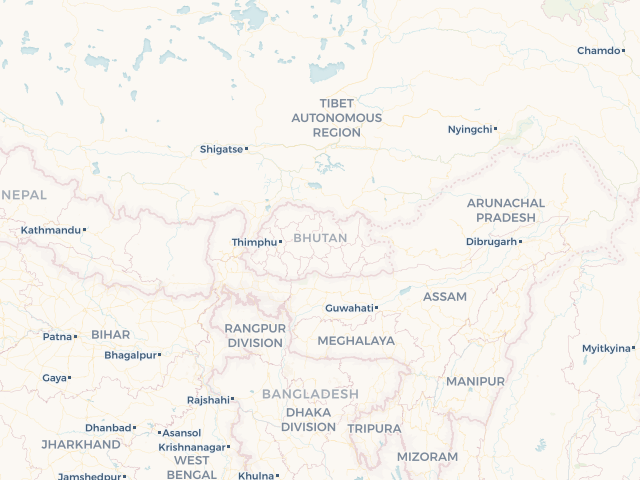
Himalayan monasteries and Gross National Happiness. As part of South Asia in Asia, Bhutan suits travelers drawn to big cities and historic. Use this guide to plan where to go, when to visit, and how to structure your days.
Start exploring.
Best time to visit: Mar – May, Sep – Nov
Paro
Plan at least a full day in Paro to enjoy its main sights, local food, and surrounding scenery.
Thimphu
Plan at least a full day in Thimphu to enjoy its main sights, local food, and surrounding scenery.
Punakha
Plan at least a full day in Punakha to enjoy its main sights, local food, and surrounding scenery.
Tiger's Nest
Tiger's Nest is a favorite stop for travelers exploring Bhutan, with plenty to see on foot or by local transit.
What it is known for
facts
Tiger's Nest monastery clinging to a Paro cliff
Gross National Happiness development philosophy
Colorful tsechu mask-dance festivals at dzongs
Prayer flags fluttering across Himalayan passes
Ema datshi chili-cheese stew with red rice
key City
name
Paro
label
Most popular city
why
International flights land here beneath Tiger's Nest, and the valley holds Rinpung Dzong and the start of most Bhutan itineraries.
Places to visit
area
Paro
attractions
name
Paro Dzong
duration
1-2 hours
book Ahead
Check official hours; book 1-2 weeks ahead if timed entry applies in peak season.
Land in Paro, check into your stay, and take an easy orientation walk. Try a well-rated local restaurant to start your Bhutan trip.
day
2
title
Explore Thimphu
description
Dedicate the day to Thimphu: main landmarks, neighborhoods, and a signature local experience before continuing your route.
day
3
title
Punakha and farewell
description
Spend your final day in Punakha visiting any missed sights, picking up souvenirs, and preparing for departure.
title
Classic Bhutan
duration
7 days
locations
Paro
Thimphu
Punakha
Tiger's Nest
highlights
Cover Paro and Thimphu
Explore Punakha
Explore Tiger's Nest
best For
Urban explorers and culture fans
days
day
1
title
Arrive in Paro
description
Land in Paro, check into your stay, and take an easy orientation walk. Try a well-rated local restaurant to start your Bhutan trip.
day
2
title
Explore Thimphu
description
Dedicate the day to Thimphu: main landmarks, neighborhoods, and a signature local experience before continuing your route.
day
3
title
Explore Punakha
description
Dedicate the day to Punakha: main landmarks, neighborhoods, and a signature local experience before continuing your route.
day
4
title
Tiger's Nest and farewell
description
Spend your final day in Tiger's Nest visiting any missed sights, picking up souvenirs, and preparing for departure.
title
Bhutan Beaches & Coast
duration
5 days
locations
Paro
Thimphu
Punakha
highlights
Coastal day in Paro
Coastal day in Thimphu
Coastal day in Punakha
best For
Sun seekers, swimmers, and coastal road trips
days
day
1
title
Arrive in Paro
description
Check in near the shore and take a relaxed walk along the waterfront. Swim or sunbathe if conditions allow, then settle into a seaside dinner in Paro.
day
2
title
Thimphu coast
description
Spend the day on Thimphu's shoreline: Tashichho Dzong, Buddha Dordenma, Memorial Chorten, with time for cafés, boat trips, or sunset views.
day
3
title
Punakha and farewell
description
Enjoy a final beach morning in Punakha, visiting Punakha Dzong, Chimi Lhakhang, Khamsum Yulley Namgyal Chorten before you depart Bhutan.
title
Bhutan Countryside
duration
7 days
locations
Paro
Thimphu
Punakha
Tiger's Nest
highlights
Rural stop: Paro
Rural stop: Thimphu
Rural stop: Punakha
Rural stop: Tiger's Nest
best For
Nature lovers, hikers, and slow travel
days
day
1
title
Arrive in Paro
description
Reach Paro, drop bags at a rural stay, and take a short walk through nearby villages or trails to get oriented.
day
2
title
Thimphu countryside
description
Explore Thimphu at an easy pace: Tashichho Dzong, Buddha Dordenma, Memorial Chorten with a focus on open landscapes away from the crowds.
day
3
title
Punakha countryside
description
Explore Punakha at an easy pace: Punakha Dzong, Chimi Lhakhang, Khamsum Yulley Namgyal Chorten with a focus on open landscapes away from the crowds.
day
4
title
Tiger's Nest and farewell
description
Wrap up with a slow morning in Tiger's Nest, stopping at Paro Taktsang (Tiger's Nest), Taktshang Goemba Trail, Taktshang Cafeteria Viewpoint before heading home.
title
Bhutan Monuments & Hot Spots
duration
7 days
locations
Thimphu
Paro
Punakha
Tiger's Nest
highlights
Must-see: Tashichho Dzong
Must-see: Buddha Dordenma
Must-see: Paro Dzong
Must-see: National Museum of Bhutan
best For
Sightseeing, history buffs, and first-time landmark hunters
days
day
1
title
Icons of Thimphu
description
Start in Thimphu with Tashichho Dzong, Buddha Dordenma, Memorial Chorten, buying timed tickets ahead when possible and finishing with a walk through the historic center.
day
2
title
Paro monuments
description
Focus on Paro's tourist favorites: Paro Dzong, National Museum of Bhutan, Kyichu Lhakhang with breaks for local food between sights.
day
3
title
Punakha monuments
description
Focus on Punakha's tourist favorites: Punakha Dzong, Chimi Lhakhang, Khamsum Yulley Namgyal Chorten with breaks for local food between sights.
day
4
title
Tiger's Nest landmarks and farewell
description
Catch any remaining must-sees in Tiger's Nest, including Paro Taktsang (Tiger's Nest), Taktshang Goemba Trail, Taktshang Cafeteria Viewpoint, before your departure.
When to go & typical weather
summary
March through May and September through November are Bhutan's prime trekking and festival seasons, with clear Himalayan views and moderate temperatures in Thimphu and Paro valleys. Spring rhododendrons and autumn tsechus define these windows.
typical Weather
Paro/Thimphu Mar-May/Sep-Nov: highs 15-22°C (59-72°F), lows 5-10°C (41-50°F), 30-50 mm rain. Tiger's Nest trail cool mornings. Higher passes near freezing at night.
details
Festival dates (Paro, Thimphu tsechu) fill hotels; book via licensed operator.
Jun-Aug monsoon clouds obscure peaks; leeches on trails.
Dec-Feb cold and snow at high passes; lower valleys OK.
Daily tourist tariff applies year-round; plan festival dates early.
most Affordable
period
Jun – Aug
summary
Monsoon months offer Bhutan's relative best value when tourist numbers drop despite the fixed daily tariff, as airlines and hotels have more availability. Cloudy peaks reduce demand even though the sustainable tourism fee applies year-round.
details
Druk Air and Bhutan Airlines seats easier to book at lower fares.
Hotel upgrades more available during monsoon lull.
Festival-free weeks in summer avoid premium group tour surcharges.
Licensed operators occasionally offer monsoon incentives on add-ons.
most Expensive
period
Mar – May
summary
Spring festival season and clear mountain views drive Bhutan's highest demand when Paro and Thimphu tsechu dates fill licensed tour capacity. March-May trekking season commands premium Druk Air fares and best lodge availability at peak prices.
details
Paro Tsechu and Thimphu festival weeks sell out tour packages early.
Spring trekking season (Mar-May) peaks guide and transport demand.
Druk Air fares highest in Mar-Apr and Sep-Oct festival windows.
Premium lodge upgrades scarce during festival peak dates.
Airports & arrivals
summary
Visitors enter through Paro International Airport on Drukair or Bhutan Airlines flights arranged with tour operators.
airports
name
Paro International Airport
code
PBH
location
Paro Valley
distance From Center
6 km (4 mi) southwest of Paro town
transfer Note
Road transfers to Thimphu take about 1 hour by tour vehicle
Getting around
overview
Bhutan has no rail; buses link towns and taxis serve Thimphu and Paro.
trains
ferries
subways
public Transit
name
Bhutan Post Bus
kind
public
description
Intercity buses linking Thimphu, Paro, and Punakha.
Bhutan measures progress by Gross National Happiness and tightly manages tourism through daily fees and licensed guides. Buddhism shapes dress, behavior, and photography near dzongs and monasteries. Respect for royalty and monks is essential.
customs
Dress modestly with covered arms and legs at religious sites.
Circumambulate chortens and prayer wheels clockwise.
Ask before photographing inside temples and of monks.
dos
Book travel through approved operators and pay the sustainable development fee.
Remove shoes and hats when entering lhakhangs and dzongs.
Use both hands when giving or receiving items from elders.
Lower your voice at memorial chortens and prayer flags.
Follow your guide's instructions at festivals and restricted areas.
donts
Do not climb on chortens, mani walls, or religious artifacts.
Do not smoke in public; tobacco sales and use are restricted.
Do not fly drones without government approval.
Do not give candy or money to children as a reflex; ask guides first.
Do not photograph inside many temples where signs prohibit it.
Useful travel phrases
language
Dzongkha
phrases
english
Please
local
བཀྲ་ཤིས
pronunciation
Kadrin chhe
english
Thank you
local
ཐུགས་རྗེ་ཆེ
pronunciation
Thug je che
english
Yes
local
ཡིན
pronunciation
Yin
english
No
local
མིན
pronunciation
Min
english
How much?
local
ག་ཚད་རེ?
pronunciation
Ga tsad re?
english
Where is the nearest restaurant or bar?
local
ཉེ་ཆའི་ཟ་ཁང་ཡང་ན་བars་ཅིག་གa?
pronunciation
Nye chai za khang yang na bar ga?
english
Where is the airport?
local
གnam་གi་མཁao་ཆen་གa?
pronunciation
Nam gi mkhao chen ga?
english
I need help
local
ངla་རoགs་དgོs
pronunciation
Nga rogs dgos
english
I need a hospital
local
ངla་སྨan་ཁhang་དgོs
pronunciation
Nga sman khang dgos
english
Call the police
local
ཉiན་མaག་boདkར་boདk
pronunciation
Nyin mag bokar bok
Longer stays
visa Summary
Bhutan does not allow independent tourism for most visitors; U.S. citizens must book through licensed tour operators and obtain a visa arranged in advance with a daily sustainable development fee. There is no open pathway for casual relocation; long-term residence is limited to employment with approved organizations or special government authorization. Bhutan's tourism and visa policies are revised periodically, so confirm arrangements only through authorized operators and official tourism boards.
Practical tips.
Book through a licensed tour operator because independent travel is restricted and the daily sustainable development fee applies.
Pack layers for Dochula Pass and high valleys where temperatures swing sharply between sunny days and cold nights.
Carry enough ngultrum for handicraft markets because card acceptance is limited outside major hotels in Thimphu.